
The best 2 player card games are Gin Rummy and Cribbage if you have a regular deck, and Lost Cities or Jaipur if you want a game built for two. For something fast and loud, play Speed or Egyptian Ratscrew. All four classics need nothing but a standard 52-card deck, and each takes less than ten minutes to learn.
Below are ten classic card games for two with quick rules, so you can start tonight, and seven boxed games that make the most of two players.
Which two-player card game should you play tonight?
Start with the column that matches your mood. Every game in this table works with one standard deck, except Spite and Malice, which needs two.
| Game | Best for | Learn in |
|---|---|---|
| Gin Rummy | The all-round classic | 5 minutes |
| Cribbage | A game you will play for years | 15 minutes |
| Speed | Ten fast, loud minutes | 2 minutes |
| Crazy Eights | Beginners and kids | 2 minutes |
| Kings in the Corner | Relaxed play while you talk | 5 minutes |
| Spite and Malice | Patient planners | 10 minutes |
| German Whist | Fans of Hearts or Spades | 10 minutes |
| Casino | Quick math and sharp eyes | 10 minutes |
| Egyptian Ratscrew | Reflexes and laughter | 3 minutes |
| Six-Card Golf | A light game with a score sheet | 5 minutes |
If you would rather buy one game made for exactly two players, these are the seven we would pick:
| Game | Category | Type | More |
|---|---|---|---|
 Lost CitiesBest overall for two | Strategy | Push your luck | $20.38checked Nov 13Pros & Cons |
 JaipurBest for fast rounds | Strategy | Trading | $26.58checked Nov 13Pros & Cons |
 Schotten TottenBest for poker fans | Strategy | Card battle | $17.99checked Nov 13Pros & Cons |
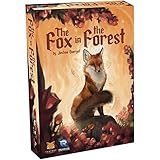 The Fox in the ForestBest trick-taking game for two | Strategy | Trick-taking | $15.99checked Nov 13Pros & Cons |
 Air, Land & Sea: Spies, Lies & SuppliesBest 15-minute duel | Strategy | Bluffing | $19.99checked Nov 13Pros & Cons |
 Star RealmsBest for head-to-head battles | Fun | Deckbuilder | $17.95checked Nov 13Pros & Cons |
 7 Wonders DuelBest for a longer game night | Strategy | Card drafting | $29.19checked Nov 13Pros & Cons |
- StrategyLost CitiesBest overall for two$20.38checked Nov 13Pros & Cons
- StrategyJaipurBest for fast rounds$26.58checked Nov 13Pros & Cons
- StrategySchotten TottenBest for poker fans$17.99checked Nov 13Pros & Cons
- StrategyThe Fox in the ForestBest trick-taking game for two$15.99checked Nov 13Pros & Cons
- StrategyAir, Land & Sea: Spies, Lies & SuppliesBest 15-minute duel$19.99checked Nov 13Pros & Cons
- FunStar RealmsBest for head-to-head battles$17.95checked Nov 13Pros & Cons
- Strategy7 Wonders DuelBest for a longer game night$29.19checked Nov 13Pros & Cons
Amazon prices last checked Nov 13, 2:14 PM UTC. Prices and availability are subject to change; the price shown on Amazon at the time of purchase applies.
Playing as a couple and looking for question decks or flirty games instead? Our guide to the best card games for couples covers conversation decks, co-op games and date-night picks.
Find your two-player game in 3 taps
1 of 3
What do you have at home?
What are the best two-player card games with a regular deck?
The best card games for two with a standard deck are Gin Rummy, Cribbage, Speed, Crazy Eights and Kings in the Corner. They have stayed popular because they were designed for two, or work well with two, and need nothing but 52 cards. The short rules below get you playing; house rules vary, so agree on details before the first hand.
Gin Rummy
Gin Rummy is the classic two-player card game and the best place to start. Each player gets 10 cards. On your turn, draw one card from the deck or the discard pile, then discard one.
You try to form melds: sets of three or four cards of the same rank, or runs of three or more in the same suit. Cards outside a meld are deadwood (face cards count 10, aces 1). When your deadwood is 10 points or less, you can knock and end the hand. Your partner can then add their loose cards to your melds. The lower deadwood total scores the difference. Going out with no deadwood at all is gin and earns a bonus, usually 25 points. Play to 100.
- Players and deck: 2, one standard deck
- Best for: couples who want one game they can play anywhere
Cribbage
Cribbage is the deepest of the classic games for two and the one people often keep playing for decades. You need a cribbage board, or a pen and paper, to keep score.
Each player gets six cards and puts two face down into the crib, an extra hand that belongs to the dealer. Then you take turns laying cards and calling out the running total. You score for hitting exactly 15 or 31, for pairs and for runs. After that, each hand is counted together with one shared card: 2 points for every combination that adds up to 15, plus pairs, runs and flushes. The dealer also scores the crib. The first player to 121 wins.
- Players and deck: 2 (also 3 or 4), one standard deck, board or notepad
- Best for: couples who enjoy a game with a little math and a lot of replay value
Speed
Speed is the fastest game on this list, because both of you play at the same time. Each player takes a hand of five cards and a personal draw pile; two cards go face up in the middle, with a spare pile next to each.
As fast as you can, play a card that is one higher or one lower than either center card. Suits do not matter, and in most house rules aces connect to both kings and twos. Refill your hand to five from your own pile. When neither of you can play, both flip a new center card from the spare piles. Whoever gets rid of all their cards first wins.
- Players and deck: 2, one standard deck
- Best for: ten minutes of energy before or after dinner
Crazy Eights
Crazy Eights is the simplest game here and a good choice for new players or a tired evening. Each player gets seven cards, and one card goes face up to start the discard pile.
On your turn, play a card that matches the top card in suit or rank. Every eight is wild: play it at any time and name the next suit. If you cannot play, draw from the deck. The first player with an empty hand wins the round. Uno works the same way, so anyone who has played it learns this in a minute.
- Players and deck: 2 to 7, one standard deck
- Best for: beginners, kids and anyone who wants rules they never have to look up
Kings in the Corner
Kings in the Corner is a slow, friendly game, closer to solitaire for two than to a battle. Each player gets seven cards. Four cards go face up around the deck, one on each side.
On your turn, draw one card, then play as many as you can. Cards go on the piles in descending order and alternating colors, like in solitaire. Kings can only start a pile in one of the four corners. You can also move a whole pile onto another one if it fits. The first player to play all their cards wins.
- Players and deck: 2 to 4, one standard deck
- Best for: a relaxed game you can play while you talk
Spite and Malice
Spite and Malice is a two-deck classic for patient planners; Skip-Bo is the boxed game based on it. Each player has a face-down payoff pile, usually 20 to 30 cards depending on house rules, with the top card turned up, plus a hand of five.
In the middle, you build shared piles that start with an ace and climb to a queen. Kings are wild. Each turn, you play from your payoff pile, your hand or your own discard piles, and end the turn by discarding onto one of up to four discard piles. Whoever empties their payoff pile first wins. The skill lies in arranging your discards so the cards you need come back at the right time.
- Players and deck: 2 (also more), two standard decks
- Best for: couples who like a game that rewards long-term planning
If you like this one but prefer a box with simple numbered cards, Skip-Bo plays almost the same way.
German Whist
German Whist is a trick-taking game made for two, so it suits anyone who likes Hearts or Spades. Each player gets 13 cards. The rest form a stock, and the top card is turned up; its suit is trump.
In the first half, the winner of each trick takes the face-up stock card, and the loser takes the next one, unseen. So you fight for good cards, not points. Once the stock is gone, you play out your 13 cards. Only the tricks in this second half count, and the player with more of them wins. You must follow suit whenever you can.
- Players and deck: 2, one standard deck
- Best for: trick-taking fans who never have four players
Casino
Casino is a fishing game: you capture cards from the table by matching or adding. Each player gets four cards, and four go face up on the table.
On your turn, play one card. You can take table cards of the same rank, or a group of cards that adds up to your card's value. Playing a 9 can capture a 4 and a 5, for example. You can also build a combination on the table and capture it on a later turn. Points go to most cards, most spades, each ace, the ten of diamonds and the two of spades. Play to 21.
- Players and deck: 2 to 4, one standard deck
- Best for: quick thinkers who like spotting combinations
Egyptian Ratscrew
Egyptian Ratscrew is a slapping game, and fast hands matter more than good cards. Split the deck evenly, face down. Take turns flipping your top card onto a center pile.
When someone plays a face card or ace, the other player gets a set number of tries to play one as well (one for a jack, up to four for an ace). If they fail, the first player takes the pile. At any moment, either of you can slap the pile when two cards of the same rank appear in a row, or with one card between them. The first slap wins the pile; a wrong slap costs a card. Whoever ends up with the whole deck wins.
- Players and deck: 2 or more, one standard deck
- Best for: laughter, mild chaos and settling who is faster
Six-Card Golf
Six-Card Golf is a light game with a running score, good for a series of evenings. Each player lays out six cards face down in two rows of three and turns two of them up.
On your turn, draw a card from the deck or the discard pile. Swap it with one of your six cards or discard it. The goal is a low total: in common scoring, kings count 0, twos count minus 2, aces 1, number cards face value, and jacks and queens 10. Two equal cards in the same column cancel out to zero. When one player has all six cards face up, the other gets one last turn. Play nine rounds, like nine holes, and the lower total wins.
- Players and deck: 2 to 6, one standard deck
- Best for: a light game with a score sheet you can keep for weeks
Which boxed card games are best for two players?
The best boxed card games for two players are Lost Cities, Jaipur and Schotten Totten: short rules, about 20 to 30 minutes and real decisions on every turn. They are all designed for exactly two players, which avoids the main weakness of classic games played with two: dealing out the whole deck leaves nothing hidden. We picked games that reviewers rate highly at two players, not party games that only work with a group.
Lost Cities

Lost Cities, by Reiner Knizia, is often the first modern game couples buy, and the one they keep. You fund expeditions to five, in this edition optionally six, remote places. Cards go out in rising order only, and every expedition you start costs you 20 points up front. Wager cards double or triple the result, good or bad.
- What players like: rules you can explain in five minutes, and decisions that stay tense to the last card.
- Watch out: the theme feels thin to some players, and a few reviewers find Battle Line or Schotten Totten more interesting with a partner who rarely plays games.
- Players and time: 2, about 30 minutes
- Best for: your first boxed two-player game
Jaipur
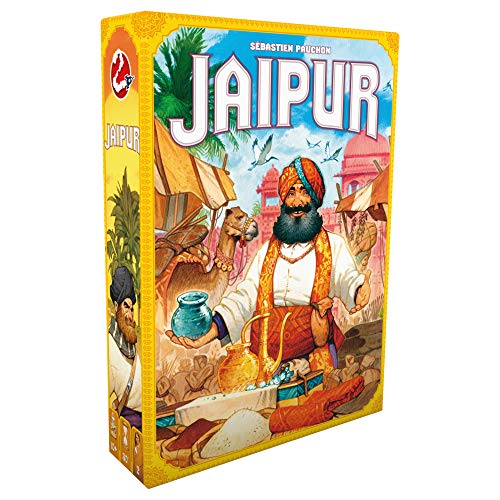
Jaipur is a trading duel between two merchants. On your turn, you either take cards from a shared market or sell a set of goods for tokens. Prices drop as goods sell, so timing matters, and larger sets earn bonus tokens. Taking all the camels clears the market for your partner, which is often the trickiest choice in the game. A match is the best of three rounds.
- What players like: fast turns, constant tension and a focus on two players that reviewers consistently praise.
- Watch out: it only works with two, and some players miss that points do not carry over from round to round.
- Players and time: 2, about 30 minutes, ages 10+
- Best for: couples who want a quick rematch game
Schotten Totten

Schotten Totten is another Knizia design. Nine stones lie between you, and you play cards to build three-card formations on your side of each one, similar to poker hands. The stronger formation claims the stone. Win five stones, or three next to each other, and you win. Battle Line is the expanded version of the same idea, with extra tactic cards.
- What players like: plenty of tension in 20 minutes, and some reviewers prefer it to Lost Cities.
- Watch out: the luck of the draw plays a part, and the direct head-to-head play is not for everyone.
- Players and time: 2, about 20 minutes, ages 8+
- Best for: anyone who likes poker hands but not betting
The Fox in the Forest

The Fox in the Forest turns trick-taking, usually a four-player family, into a game for two. Odd-numbered cards have special effects, such as changing the trump suit or letting you lead after losing a trick. The twist is in the scoring: winning too many tricks earns nothing, so sometimes you aim to lose. The publisher also makes a cooperative version, The Fox in the Forest Duet, where you play as a team.
- What players like: it feels familiar to fans of classic trick-taking games, is quick to pick up, and the small box travels well.
- Watch out: the co-op Duet version gets more mixed reviews than this original, so check which box you order.
- Players and time: 2, about 30 minutes
- Best for: fans of German Whist, Hearts or Spades
Air, Land & Sea: Spies, Lies & Supplies

Air, Land & Sea uses only 18 cards, yet the decisions are among the toughest on this list. You fight over three areas, playing cards face up for their effect or face down as a weak wildcard. You can also withdraw from a battle early, which gives your partner fewer points. This standalone version swaps the original's air, land and sea for Intelligence, Diplomacy and Economics, and also works as an add-on to the original.
- What players like: a lot of bluffing and back-and-forth in 15 to 30 minutes, in a box that fits a coat pocket.
- Watch out: it adds some complexity over the original. One review suggests skipping it if you already own Air, Land & Sea.
- Players and time: 2, 15 to 30 minutes
- Best for: couples who enjoy reading each other's bluffs
Star Realms

Star Realms is a deckbuilding game: you start with a weak deck, buy better ships and bases from a shared row, and attack each other directly. Each player starts with 50 authority, and whoever drops to zero loses. It is cheap, plays in under half an hour, and is often called the best two-player deckbuilder.
- What players like: fast, aggressive games and a small box at a low price.
- Watch out: one strong start can snowball, and if you know other deckbuilders, it brings few surprises. Direct attacks are not everyone's idea of a fun evening.
- Players and time: 2, about 20 to 30 minutes
- Best for: competitive couples who like sci-fi
7 Wonders Duel

7 Wonders Duel is the two-player version of the popular 7 Wonders, and the meatiest game here. Over three rounds, you take cards from a shared layout to build your civilization. You can win right away through military strength or scientific progress, or at the end on points. It comes with a small board and tokens, so it sits between a card game and a board game.
- What players like: three different ways to win, lots of interaction and a game that still fits into about 30 minutes.
- Watch out: luck still plays a role in which cards come out, and several reviewers recommend card sleeves because the cards get heavy use.
- Players and time: 2, about 30 minutes, ages 10+
- Best for: couples who want one deeper game for long evenings
What makes a good card game for two players?
A good two-player card game keeps some information hidden and gives you a real choice on every turn. Many group games lose both when played with two: if you deal out the whole deck, each player can work out the other's hand. That is why classics like Gin Rummy and German Whist leave a stock of cards, and why the boxed games above were designed for exactly two.
Three things help you choose:
- Speed or depth. Speed and Egyptian Ratscrew are over in minutes; Cribbage and 7 Wonders Duel reward years of play.
- Luck or control. Crazy Eights and Golf forgive mistakes. Cribbage, Lost Cities and Air, Land & Sea let the better plan win more often.
- Battle or side by side. Some couples love direct attacks, as in Star Realms. Others prefer games like Kings in the Corner, where you mostly build your own thing.
How do you make a card game night for two more fun?
Keep it light: agree on the rules before the first hand, play for something small and stop while it is still fun. A few habits help, especially when one of you plays far more often than the other:
- Play one open hand first. Show each other your cards for a round and talk through the choices. It is the fastest way to learn.
- Keep a running score. A notebook with a season tally for Gin Rummy or Golf turns single games into a rivalry you both look forward to.
- Play for a small prize. The loser makes coffee, picks the next movie or chooses tomorrow's dinner.
- Swap the game, not the partner's mood. If one of you keeps losing at a strategy game, switch to Speed or Crazy Eights for a while.
Card games make an easy date night at home. For more ideas around the game, see these date night ideas at home. If you prefer to talk rather than compete, try one of these question games for couples, which need no cards at all. And for a playful end to the evening, there is our free truth or dare game for couples.
Can you play two-player card games online?
Yes. Most classics on this list, including Gin Rummy, Cribbage and Spite and Malice, exist as free online games and apps, so you can play together during a long-distance stretch or on a trip. Star Realms also has an official digital version. For a video call, a real deck still works: each of you plays Golf or Speed against your own cards and you compare scores. More two-player ideas beyond cards are collected in these board games for couples and this longer list of games for couples.
How we chose these games
- Made for two, or plays well with two. Group games that only shine with four or more are not on the list.
- Easy to start. Every classic game can be explained in under 15 minutes, and every boxed game in a single read of the rules.
- A clear role. Each game suits a different mood, from ten-minute speed to a long, thoughtful evening.
- Independent opinions. For the boxed games, we compared reviews from tabletop sites and note the main criticism of each one.
Frequently asked questions
What is the best 2 player card game?
With a regular deck, Gin Rummy is the best all-round two-player card game: it takes minutes to learn and has a real decision on every turn. Cribbage is the deeper choice. If you want to buy a game made for two, start with Lost Cities or Jaipur.
What card games can two people play with a regular deck?
Gin Rummy, Cribbage, Speed, Crazy Eights, Kings in the Corner, German Whist, Casino, Egyptian Ratscrew and Six-Card Golf all work with two players and one standard deck. Spite and Malice needs two decks.
What is the easiest card game for two players?
Crazy Eights is the easiest: match the top card by suit or rank, eights are wild, and the first player out of cards wins. Speed and Egyptian Ratscrew are almost as simple and much faster.
What is a good fast card game for two?
Speed and Egyptian Ratscrew both take a few minutes per round, because quick hands matter more than planning. Among boxed games, Air, Land & Sea plays in about 15 minutes.
Which two-player card games are good for couples?
Any game on this list works for couples. Kings in the Corner and Six-Card Golf leave room to talk, while Lost Cities and Jaipur suit couples who like friendly competition. For conversation decks and flirty games, see our guide to the best card games for couples.
Can you play Uno with two players?
Yes. With two players, a Reverse card works like a Skip, so you play again. If you do not have Uno at home, Crazy Eights plays the same way with a regular deck.
Some links in this guide are affiliate links. As an Amazon Associate, BondAmour earns from qualifying purchases. It costs you nothing extra and does not change which games we recommend.